
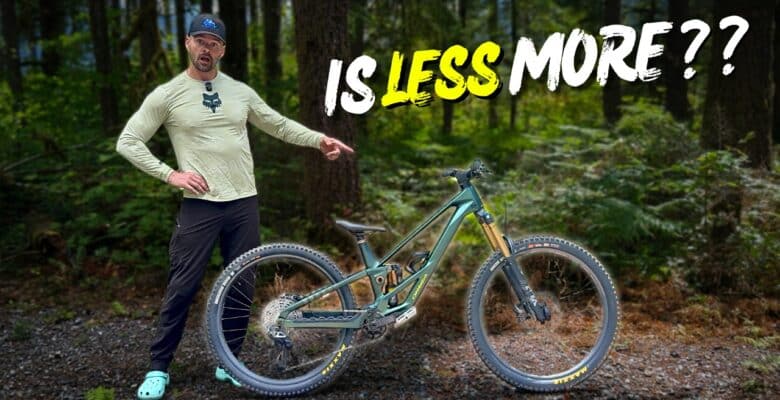
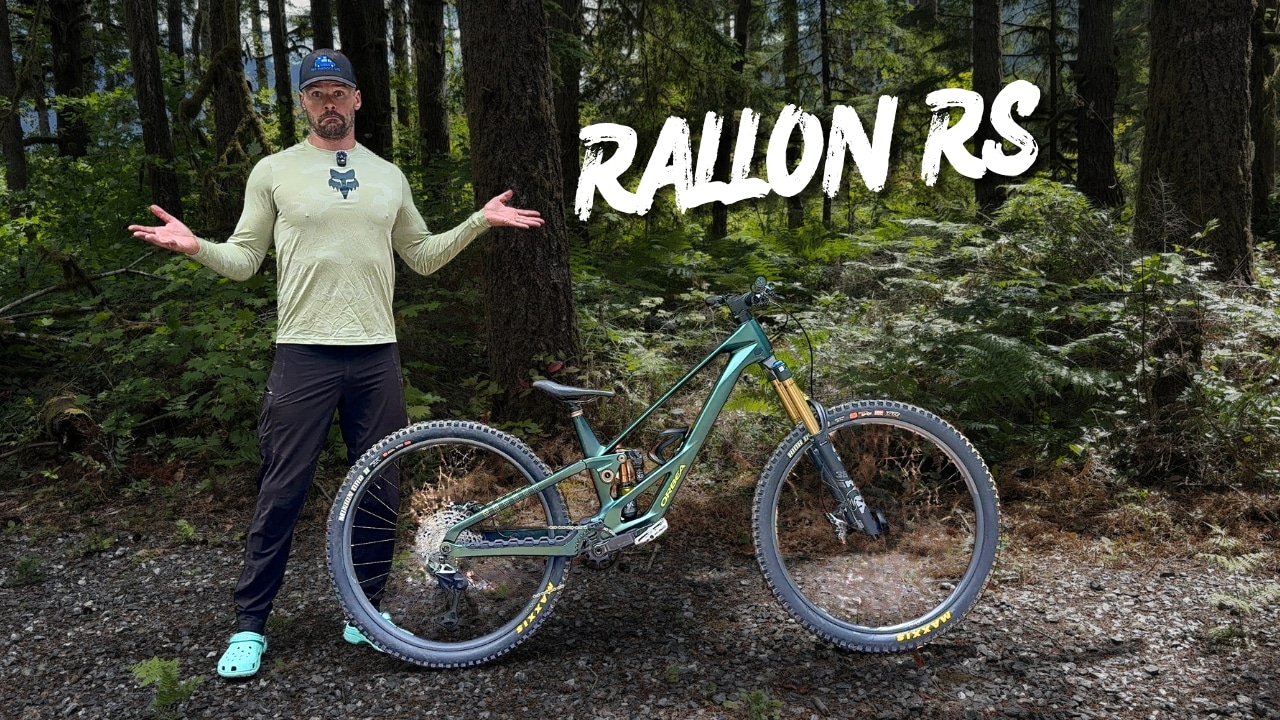
The Orbea Rallon RS is a 39-pound enduro e-bike with 180 millimeters of front travel, a compact TQ motor, and an unusually integrated electronic ecosystem.
On paper, it sounds like the answer for riders who want some assistance climbing without sacrificing the feel of a proper enduro bike on the way back down.
But does a smaller motor provide enough help to justify the price? And when you point the Rallon downhill, does it still feel like a real enduro bike—or like a lightweight e-bike trying to imitate one?
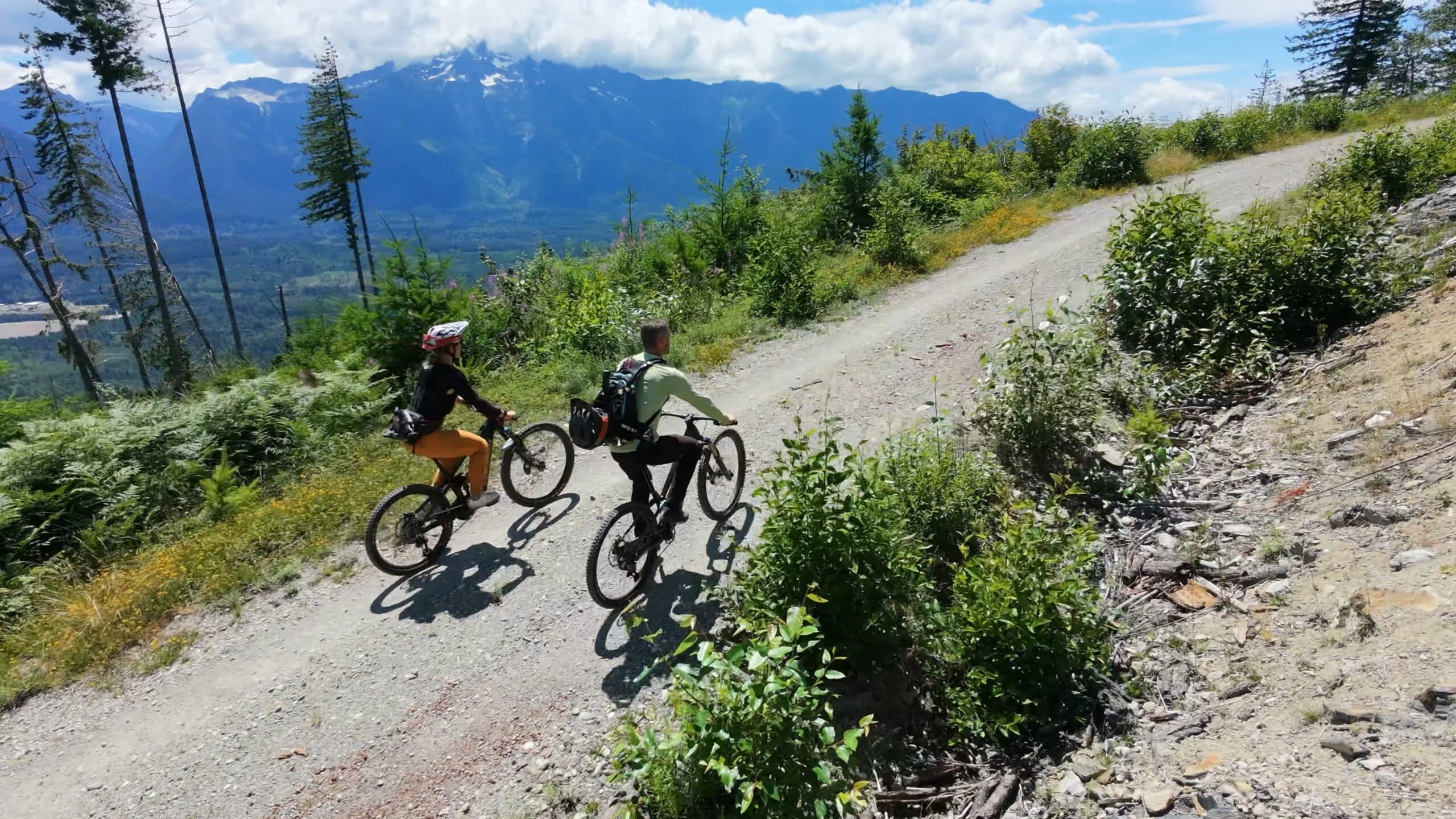
To find out, we climbed more than 3,200 feet, completely drained the battery, and rode everything from fast singletrack to steep, chunky double-black trails.
The Bike We Tested
We tested the Orbea Rallon RS-TEAM 29″ 20mph, which retails for $12,127.
Orbea loaned us the bike for this review but had no influence over what we said or the conclusions we reached.
The Rallon RS uses the compact TQ HPR40 drive system. According to Orbea, the motor produces up to 200 watts of assistance and 40 Nm of torque. It is powered by a 290Wh internal battery, with an optional 160Wh range extender available for riders who want to go farther.
Those numbers are substantially smaller than what you’ll find on most full-powered eMTBs. That is also a large part of the reason the complete bike weighs only around 39 pounds.
This isn’t supposed to be a full-powered e-bike in a lighter package. The entire concept is built around a different compromise: provide enough assistance to make climbing easier while preserving the handling and downhill performance of a high-end enduro bike.
More Assistance Than We Expected
The HPR40 motor provides noticeably less assistance than a full-powered eMTB, but it gave us more help than we expected.
You still have to pedal. It doesn’t flatten every climb or propel you uphill with the same authority as a larger motor. For a rider who wants maximum power or effortless climbing, this probably isn’t the right system.
But that isn’t really the point of the Rallon RS.
The motor takes enough of the sting out of climbing that we could access the descents we wanted without turning the bike into something heavy and cumbersome. For riders with a reasonable level of fitness, the amount of assistance may be enough to make long climbs enjoyable—or at least significantly less painful.
Our only minor complaint about the motor was that its delivery occasionally felt slightly jumpy. Compared with the smoother TQ HPR60 system we’ve ridden, the HPR40 didn’t always apply its power as naturally as we expected. That may be something that can improve with future software tuning.
How Far Can a 290Wh Battery Take You?
Battery capacity matters only if it prevents you from completing the rides you want to do.
During our range test, we climbed more than 3,200 vertical feet before completely draining the battery. We also had the assistance turned up, rather than deliberately conserving power to chase the largest possible number.
For a 39-pound eMTB with a 290Wh battery, we thought that was pretty impressive.
A larger battery could provide more range, but it would also add weight. The optional range extender is available for longer days, but for the kind of riding this bike is designed around, the internal battery delivered a useful amount of climbing without undermining the reason this bike exists.
What Happens When the Battery Dies?
One advantage of a lightweight eMTB becomes obvious when the battery runs out: you’re not stranded with a 55- or 60-pound bike.
Once we drained the Rallon’s battery, we could continue pedaling it and even push it back uphill to repeat features. It was still an e-bike, but its relatively low weight made a dead battery much less disruptive than it would be on most full-powered machines.
The bike also manages its remaining energy intelligently. Because the motor, display, drivetrain, dropper post, and suspension all draw power from the central battery, the system preserves enough energy to keep the essential electronic components functioning after motor assistance ends.
That integrated design sounds complicated, but the electronic complexity wasn’t an issue once we understood the system and its limits.
The Downhill Performance Is the Reason to Buy It
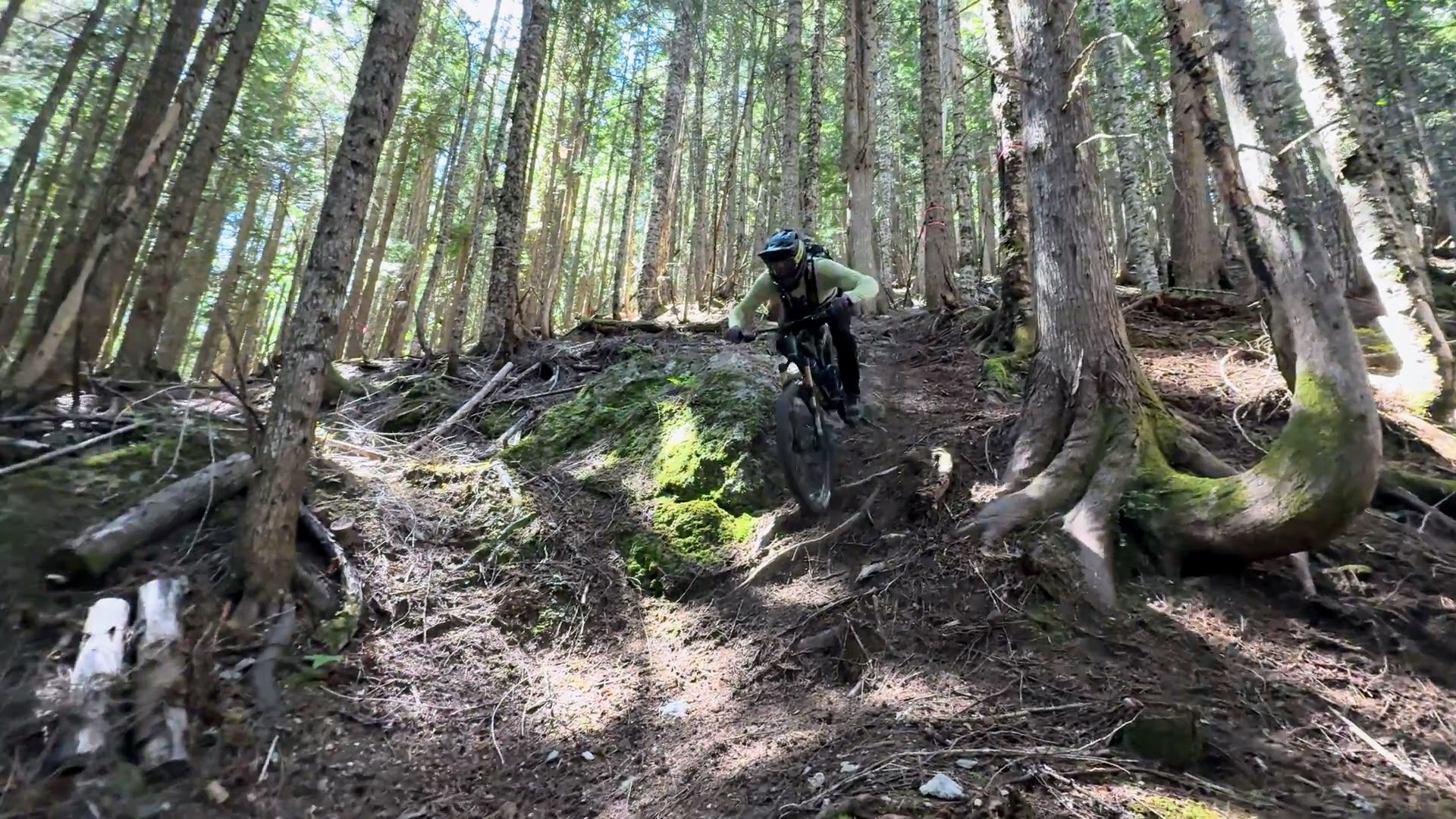
The Rallon RS immediately felt at home when we pointed it downhill.
It is a large-travel enduro bike, and it has the planted, capable feel we want when the trail gets fast, steep, and rough. At the same time, its relatively low weight makes it easier to move around than most eMTBs.
We could still notice some extra weight when quickly unweighting the bike, but that wasn’t necessarily a negative. A 180/170mm enduro bike should feel glued to the ground when the terrain gets rough, and the Rallon delivers that confidence without feeling dead or cumbersome.
More importantly, it was light enough that we were willing to push it back uphill and session features. That isn’t something we often want to do with a full-powered eMTB.
The electronic suspension also contributes to the bike’s versatility. It can adapt to what the bike is doing without requiring the rider to constantly reach for controls, helping the Rallon pedal efficiently while remaining ready for aggressive descending.
The Real Tradeoff: Power Versus Ride Quality
It would be nice to have more motor power, but only if it came without sacrificing the Rallon’s weight and downhill performance.
That is the central question with this bike.
A full-powered eMTB will get you uphill faster and with less effort. It will probably offer more range as well. But the larger motor and battery generally add weight, and that changes how the bike feels everywhere—especially on the descent.
We’re not convinced that would make the Rallon better.
Given the choice, we would pick this bike over almost every full-powered eMTB we’ve ridden. We would rather have a fun, capable downhill bike with somewhat less assistance than maximize climbing power at the expense of how the bike rides.
The Rallon RS may not offer the most motor, but it may offer a better balance.
How Does It Compare With Other Lightweight eMTBs?
Compared with the Transition Regulator SX (review here), the Bosch SX motor provides more climbing power. The Rallon RS, however, feels more downhill-focused and capable when the terrain becomes aggressive.
The Norco Sight VLT with the TQ system (review here)required slightly less effort on the climbs, but it also felt heavier.
The Mondraker Dune RR feels more planted and has a slacker, more specialized character that may give it an advantage in extremely steep terrain. The Rallon feels more playful and versatile across a broader range of trails.
The Rallon also reminded us of the Rocky Mountain Altitude (checkout my setup here), although the Orbea may be even more downhill-capable and race-oriented.
These aren’t absolute rankings. They illustrate the decision Orbea made with the Rallon RS: prioritize the experience of riding a high-performance enduro bike, then add enough motor assistance to help riders reach more descents.
Who Is the Orbea Rallon RS For?
This bike makes the most sense for an enduro rider who loves descending but doesn’t necessarily love the climbing required to access it.
It should also appeal to fit riders who don’t need a motor to do all the work. If you come from a fitness background—or simply want your climbs to remain part of the ride—the smaller motor provides assistance without removing the effort entirely.
It is probably not the right bike for someone who wants maximum power, the longest possible range, or the most assistance for the money.
It is also undeniably expensive. At $12,127, this is not a budget-friendly way to enter the eMTB world. It feels like a high-quality bike, but the price will place it out of reach for many riders.
If your local riding combines sustained singletrack climbs with steep, technical descents—and money isn’t the primary concern—the Rallon RS makes a compelling argument for itself.
Is Less More?
In this case, it might be.
The Orbea Rallon RS doesn’t provide the power or range of a full-powered eMTB. In exchange, it delivers something we value more: the handling, weight, and downhill performance of a real enduro bike.
The 3,200 feet of climbing we achieved was impressive for a bike this light. The motor provided more assistance than we expected, and the electronic integration wasn’t a problem once we understood how the system worked.
Most importantly, the Rallon was fantastic to ride downhill.
We would happily take its lower-powered motor over the additional weight and compromised handling of almost every full-powered eMTB we’ve ridden. It won’t be the right answer for everyone, but for riders who care more about the descent than getting to the top with minimal effort, the Rallon RS may have found the sweet spot.
Watch the Full Review
Watch our complete Orbea Rallon RS review to see the bike on the climbs, follow our full battery-range test, and see how it performed on steep, technical trails.
Thanks to WARDER for Supporting This Video
This video is sponsored by WARDER, a compact trail tool designed to turn a standard reciprocating saw blade into a lightweight hand saw.
WARDER weighs approximately six ounces and accepts standard reciprocating saw blades up to 12 inches long, making it easy to carry a useful cutting tool without adding much weight to your pack.
Learn more at Warder.com.
Orbea Rallon RS: The Bottom Line
- What impressed us: Its downhill capability, relatively low weight, useful climbing assistance, and impressive 3,200-foot range during our test.
- The main compromise: Less motor power than a full-powered eMTB.
- Our minor criticism: The motor assistance occasionally felt slightly jumpy.
- The biggest obstacle: A $12,127 price.
- Who it’s for: Enduro riders who want help reaching the top without sacrificing how their bike feels on the way down.
- Our verdict: We would choose it over almost every full-powered eMTB we’ve ridden.
Leave a Reply